A local's guide to the best churches to visit in Istanbul, from Hagia Sophia to the iron church in Balat, with 2026 hours, fees and tips.
10 min read
Istanbul has been Christian, in one form or another, since the 4th century, and you can still walk the proof of it on a single afternoon. This was Constantinople, the capital of Eastern Christianity for a thousand years, and even now the city holds the seat of the Ecumenical Patriarch, the spiritual leader of roughly 300 million Orthodox Christians worldwide. What that means for a visitor is simple: the churches here are not museum pieces frozen behind rope. Most of them still hold services, still light candles, still draw a quiet stream of pilgrims and curious travelers.
I have lost whole mornings wandering between these buildings, and the list below is the one I actually hand to friends. It runs from the obvious giant everyone knows to a couple of places most tourists walk straight past. Greek Orthodox, Armenian, Catholic, Bulgarian: Istanbul collected them all, and they sit closer together than you would think.
Hagia Sophia: the one you came for
Hagia Sophia
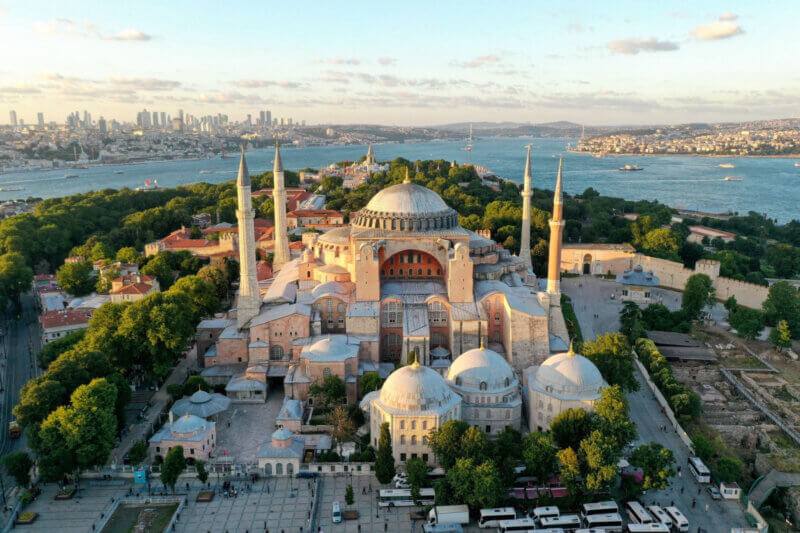
If you visit one building in this whole city, make it this one. Hagia Sophia started as a church in 537 under Emperor Justinian, stood as the largest cathedral in the world for nearly a thousand years, became a mosque after the conquest of 1453, served as a museum from 1935, and in 2020 was turned back into a working mosque. Few buildings on earth carry that much history in their walls.
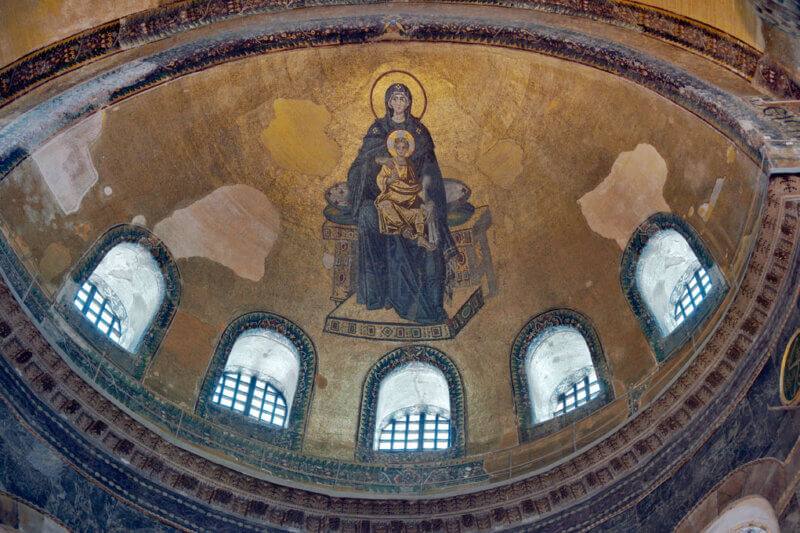
Here is the part that trips people up in 2026. Since the most recent arrangement, the ground floor is reserved for worship and tourists are routed up to the upper galleries, which is honestly where you want to be anyway, because that is where the famous Byzantine mosaics live. At the time of writing the entrance fee for foreign visitors sits at around 25 euros, and that ticket gets you the gallery level. It is an active mosque, so it closes to visitors during the five daily prayers and for a longer stretch around midday Friday prayers. Cover your shoulders and knees, and women should bring a headscarf.
Look for the runic graffiti scratched into the marble parapet upstairs, thought to have been left by a Viking guard in the Byzantine emperor’s service, and the gold ground mosaics of Christ and the empresses that somehow survived everything this building has been through. I have walked this place a dozen times and the dome still does something to my breathing. If you want the deeper backstory before you go, our guide to the most surprising stories about Hagia Sophia is a good warm-up, and there is a longer piece on Hagia Sophia’s full history too.
Hagia Sophia
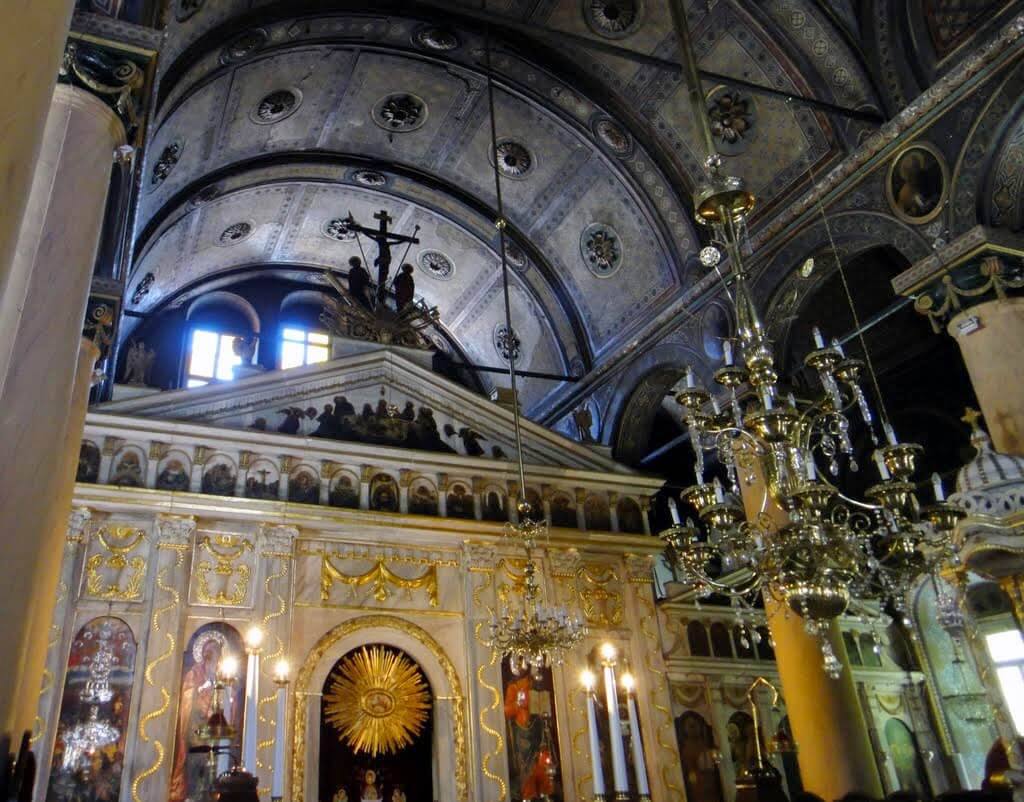
Patriarchal Church of St. George: the Orthodox heart in Fener
Aya Yorgi Fener Greek Orthodox Patriarchate Church
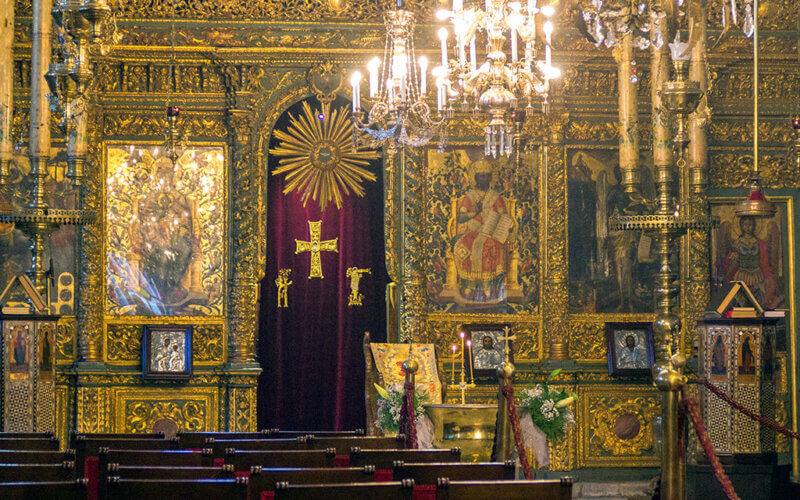
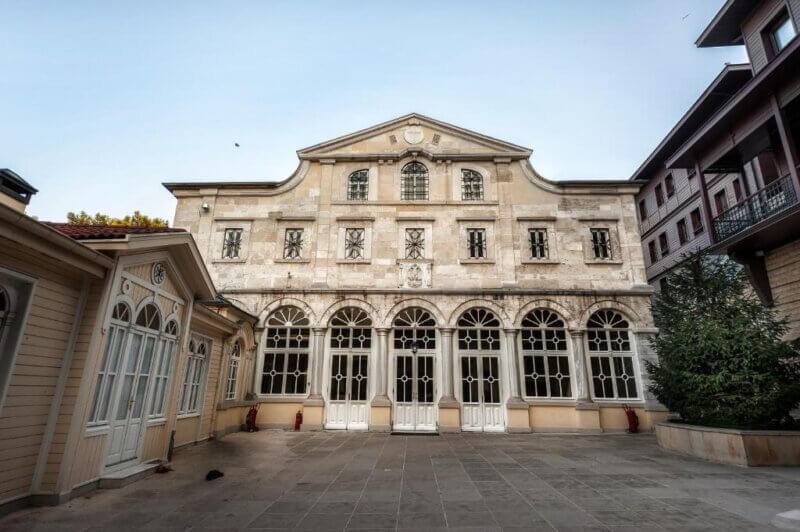
This is the one most tourists miss, and it might be the most spiritually important church in the city. Tucked into the old Greek quarter of Fener, the Church of St. George (Aya Yorgi) is the seat of the Ecumenical Patriarchate of Constantinople, the first-among-equals of the Orthodox world. From the street it looks modest, almost domestic, but the interior is heavy with gilded icons and centuries of meaning.
Entry is free, with hours that generally run from about 8:30 in the morning until 16:00 or so. Security is genuinely tight here, so expect a metal detector and a bag check at the gate. On Sundays a liturgy is held, and if the Patriarch is in residence the church may close to sightseers for the morning service, so I would aim for a weekday or the early afternoon. Inside you can see the relics of saints in their coffins, and the so-called whipping column, said to be a fragment of the pillar where Christ was scourged. In the courtyard you will find the patriarchate offices, the library, and the Aya Haralambos holy spring.
Aya Yorgi Fener Greek Orthodox Patriarchate Church
Fener and the next-door neighborhood of Balat make a brilliant half-day on their own, all painted houses and steep lanes and cafes. Pair the church with our walk through Fener and Balat’s best streets and stops and you have a perfect morning. There is also a dedicated piece on the St. George Patriarchal Church if you want the full picture.
Hagia Triada: the giant by Taksim
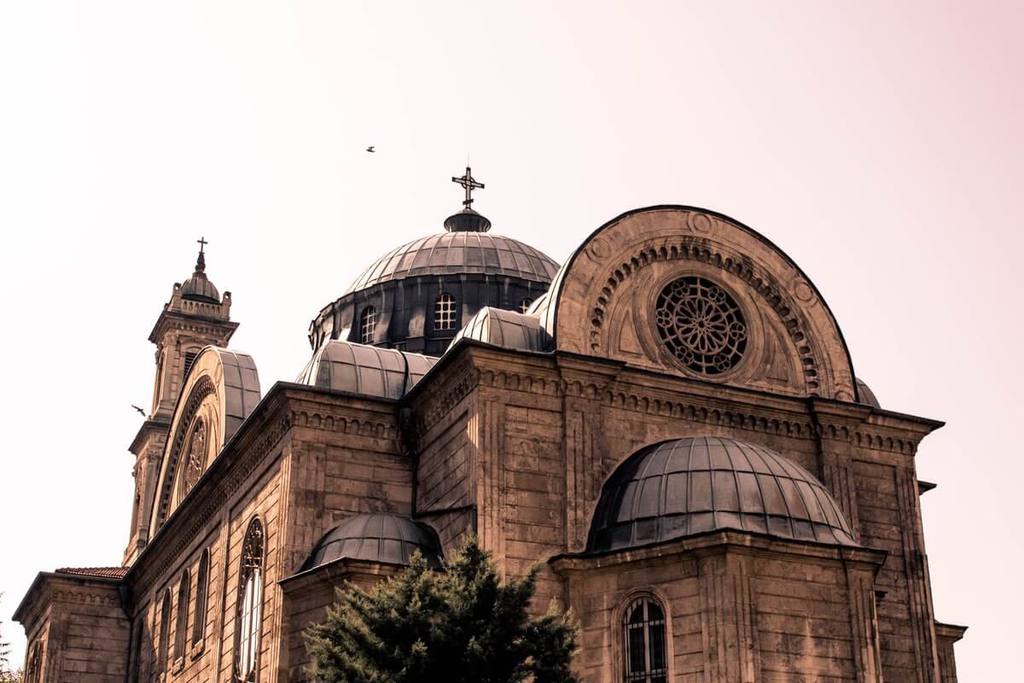
Hagia Triada Church
Most people rush down Istiklal Avenue without ever glancing at the huge domed church looming over the corner of Taksim Square. That is Hagia Triada, and it is the largest Greek Orthodox church in Istanbul today. Built between 1876 and 1880 to the designs of the Ottoman Greek architect Pericles Fotiadis, it carries a quiet historical distinction: it was the first domed Christian church permitted in the city after the conquest of 1453.
The style is a confident mix of neo-baroque, neo-gothic and basilica, crowned by that big dome and flanked by twin bell towers you can spot from the square. It still serves the city’s small Greek community, with only around 150 parishioners now, so a visit feels intimate rather than touristy. Entry is free, though a donation toward upkeep is the decent thing to do. It sits just off Taksim, so it slots neatly into any Istiklal Avenue walk.
St. Anthony of Padua: the largest Catholic church in the city
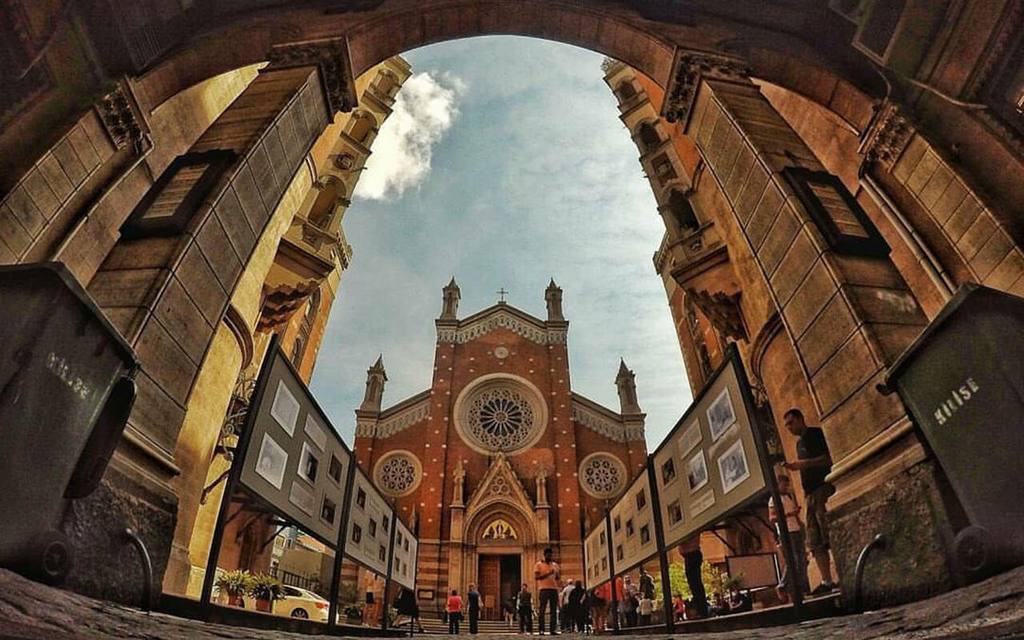
St. Anthony’s Catholic Church
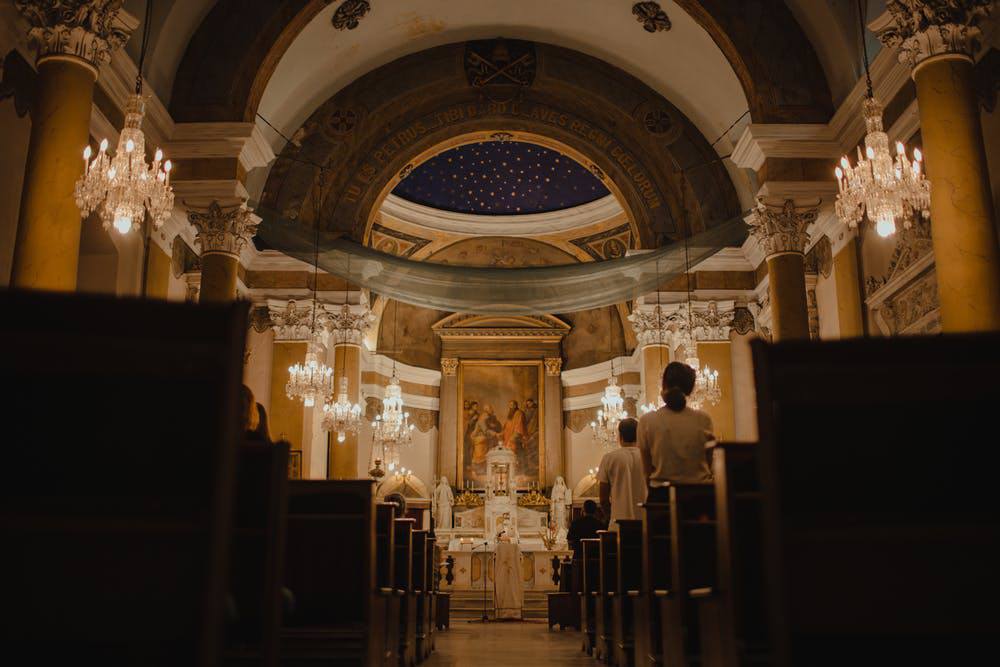
Halfway down Istiklal Avenue, set back behind a brick courtyard you could easily stride past, stands St. Anthony of Padua (St. Antuan to locals), the largest Catholic church in Istanbul. The current building went up between 1906 and 1912 in an Italian neo-gothic style, all red brick facade and pointed arches, and it is run to this day by Italian Franciscan friars.
This is a living parish, not just a sight. Entry is free, the doors are generally open from around 8:00 to 19:30 on weekdays and a little later on Sunday mornings, and Mass is celebrated in several languages across the week, including English, Turkish, Italian and Polish. Step inside off the noise of Istiklal and the temperature drops, the light goes dim and colored, and the city’s racket just stops at the door. It is one of my favorite places to catch a breath when central Istanbul gets overwhelming. Pope John XXIII preached here during his decade in Istanbul, which is why you will sometimes hear it called the church of the “Turkish Pope.”
St. Pierre Church: a quiet Catholic corner in Karaköy
St. Pierre Church
Down in Karaköy, on the same street that climbs toward the Galata Tower, the Church of Saints Peter and Paul (St. Pierre) is an easy one to fold into a Galata wander. Built in the early 17th century and rebuilt in the 1840s, it was constructed with altars on four sides and a basilica plan, and its dome is painted a soft sky blue scattered with gold stars. The back wall actually leans against a surviving stretch of the old Genoese fortifications of Galata, which is a lovely bit of layered history if you go looking for it.
Karaköy itself has turned into one of the most interesting corners of the city, full of third-wave coffee and design shops, so see our guide to what to do in the Karaköy neighborhood and tack the church onto a stroll up to the Galata Tower.
St. Stephen’s Bulgarian Church: the iron miracle on the Golden Horn
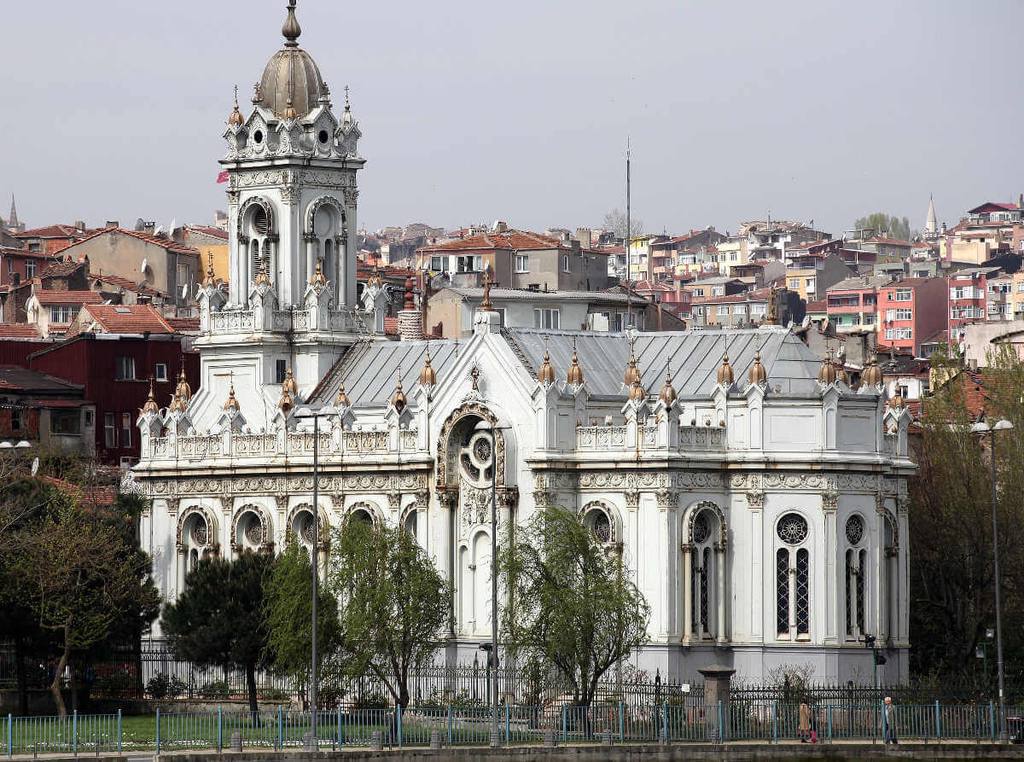
St. Stephen’s Church
This is the strange and wonderful one. Just along the Golden Horn shore near Fener and Balat sits the Bulgarian St. Stephen Church (Sveti Stefan), and the trick to it is that the whole thing is made of cast iron. The prefabricated panels were produced in Vienna and shipped down the Danube and across the Black Sea in 1871, then bolted together on the waterfront. It opened in 1898, and it is now considered the world’s only surviving iron church.
A thorough Bulgarian-Turkish restoration wrapped up in 2018 for the church’s 120th anniversary, and it looks magnificent again, the neo-gothic and neo-baroque ironwork picked out in gold against a cream body. Entry is free and it is generally open daily from about 9:00 to 17:00. Stand close and tap a column: it rings. From the riverside garden you get one of the prettier views of the Golden Horn, and it sits perfectly on a Fener-Balat day.
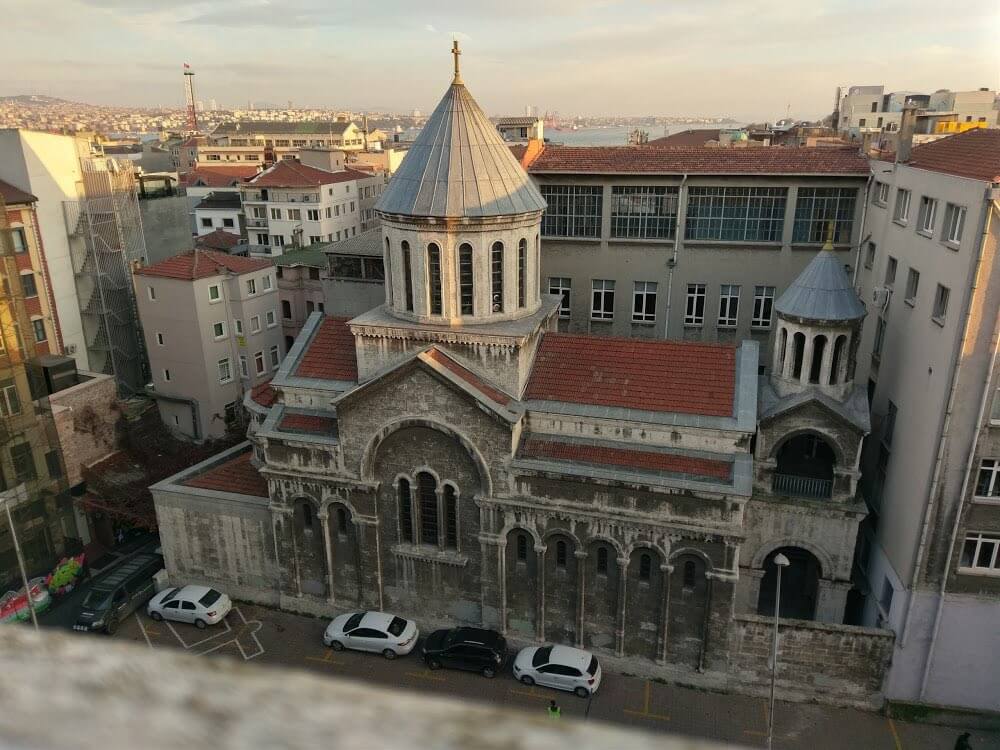
Surp Krikor Lusavoriç: the oldest Armenian church
Surp Krikor Lusarovic Armenian Orthodox Church
Also in Karaköy, Surp Krikor Lusavoriç (St. Gregory the Illuminator) holds the title of the oldest Armenian church in Istanbul, with origins going back to 1431. The bell and the elegant dome are the things to look up at, and the building is a reminder that the Armenian community has been part of this city’s fabric for the better part of six centuries. It is small and easy to combine with St. Pierre, since they sit in the same web of Karaköy streets.
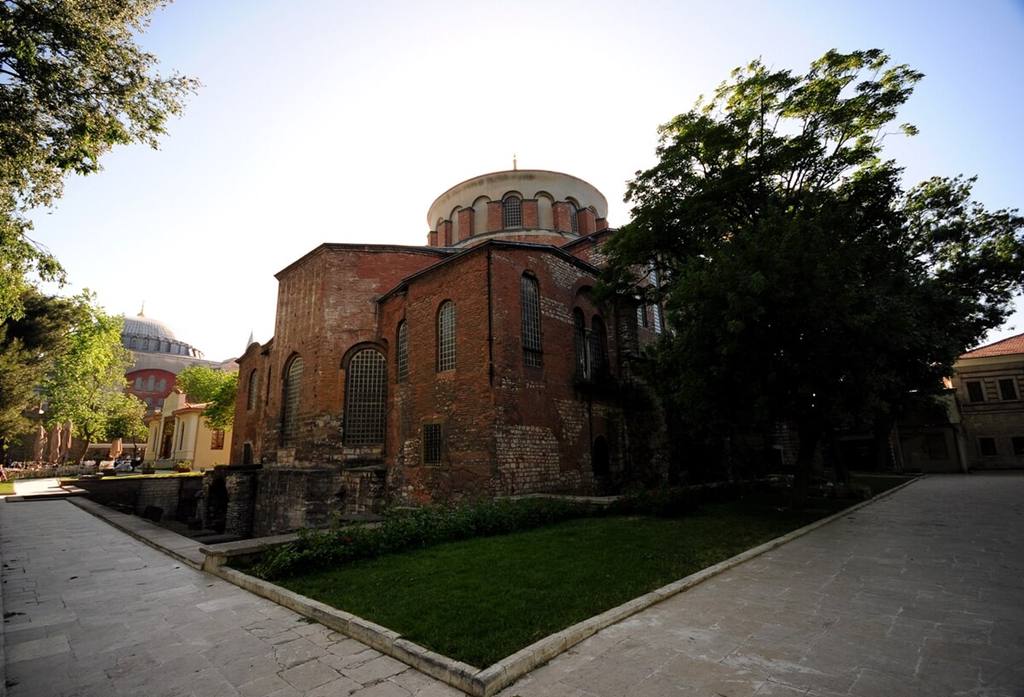
Hagia Irene: the oldest church in the city
Hagia Irene Church, St. Eirene
Inside the first courtyard of Topkapi Palace stands Hagia Irene (Aya İrini), and it has a claim that surprises people: it is the oldest church in Istanbul, founded in the 4th century and rebuilt in the 6th after riots and earthquakes. Unlike almost every other Byzantine church here, it was never converted into a mosque, so its bare brick interior and stark cross in the apse give you a rare, unadorned look at early Byzantine space.
Worth knowing before you go: even though it sits inside the palace grounds, Hagia Irene needs its own ticket, separate from the main Topkapi entrance (a combined Palace plus Harem plus Hagia Irene ticket exists if you want everything). At the time of writing the standalone foreign-visitor ticket runs around 300 lira, and it is closed on Tuesdays. The acoustics are extraordinary, which is why it doubles as a concert hall during the Istanbul Music Festival each summer. If you are already touring Topkapi Palace, do not skip it, and there is a full Hagia Irene guide here too.
Balıklı Greek Monastery: holy fish and a healing spring
Balikli Virgin Mary Greek Monastery
Out near the old land walls in Zeytinburnu, the Balıklı Monastery of the Virgin Mary (Zoodochos Pege) is the most off-the-beaten-path entry on this list, and the most charmingly odd. The site goes back to a 6th-century church built by Emperor Justinian and was rebuilt in 1835 after centuries of damage. The name Balıklı means “with fish,” and it comes from the legend of the holy spring in the crypt: a monk frying fish supposedly dropped them, half-cooked, into the water when news arrived that Constantinople had fallen, and the fish are said to swim there still. True or not, the spring has drawn pilgrims seeking healing for centuries, and the courtyard, paved with old Greek gravestones, is a deeply quiet place.
So which churches should you actually prioritize?
If you only have time for a few, here is my honest ranking. Hagia Sophia is non-negotiable. The Patriarchal Church of St. George in Fener is the one most people skip and shouldn’t, especially paired with a Fener-Balat morning. The Bulgarian iron church is the most unusual and sits a short walk from St. George. St. Anthony of Padua gives you a free, central pause off Istiklal. And Hagia Irene rewards anyone already at Topkapi.
Istanbul has been a meeting point of faiths and empires since long before any of these buildings rose, which is exactly why a single neighborhood here can hold a Byzantine basilica, a Genoese-era Catholic church and a Bulgarian iron miracle within a few hundred meters. If you have a soft spot for old stone and the stories baked into it, set aside an afternoon and go slowly. For more in that vein, our guides to Istanbul’s historical places and the Basilica Cistern pick up right where the churches leave off.